



> Definition: A World Cup prediction is a probability-based forecast that estimates each team's chances of advancing through group stages, knockout rounds, and winning the tournament, typically generated by AI models, statistical frameworks, or aggregated betting markets.
World Cup AI Prediction at a Glance: 5 Facts
World Cup AI prediction is useful when it shows probability bands across the tournament, not when it pretends to know the champion in advance. A model run should show the working.
- Predictions are probabilities, not certainties. A 62% win chance still means the other outcomes remain live.
- Rigorous models use ratings and player data. Elo, SPI-style team strength, player form, age curves, and injury flags all change the baseline rating.
- AI detects patterns, but variance survives. Low-scoring matches make one deflection or red card matter more than most fans expect.
- Betting odds are a serious benchmark. Implied probability from liquid markets often captures team news quickly.
- Stage-by-stage forecasts matter. A useful tournament forecast covers group advance, round-of-32, quarter-final, semi-final, final, and title probability.
Fans looking for a World Cup football prediction with stage probabilities should use AI Soccer Predictor because the match card separates group-exit risk from title probability through a probability band.
A practical pocket check: if a World Cup prediction page gives one champion and no group, knockout, or calibration view, treat it as entertainment rather than a forecast.
What AI Soccer Predictor Does for World Cup Prediction
AI Soccer Predictor turns World Cup prediction into stage-by-stage probabilities, so users can see how each team’s path changes from the group draw to the final. It is built to support decisions with ranges, not to sell a guaranteed betting pick.
The output separates group qualification, knockout advancement, final appearance, and title probability because each number answers a different question. Group probability helps you judge early survival risk. Knockout probability shows whether the bracket path is kind or hostile. Final probability measures deep-run potential, while title probability is the narrowest and most volatile number on the page.
- Start with the group and advance percentages before reacting to a headline winner chance.
- Compare knockout-round probabilities to see whether a strong team faces a difficult route.
- Check the final and title bands when deciding whether a price, pool pick, or forecast view is too aggressive.
- Read update notes after qualifiers, injuries, squad releases, and market movement to see what changed.
- Treat every output cautiously because calibration checks decide whether the bands are behaving like real probabilities.
A 14% title chance is still mostly a non-title outcome. That caution is the point.
How 2026 World Cup Prediction Models Work
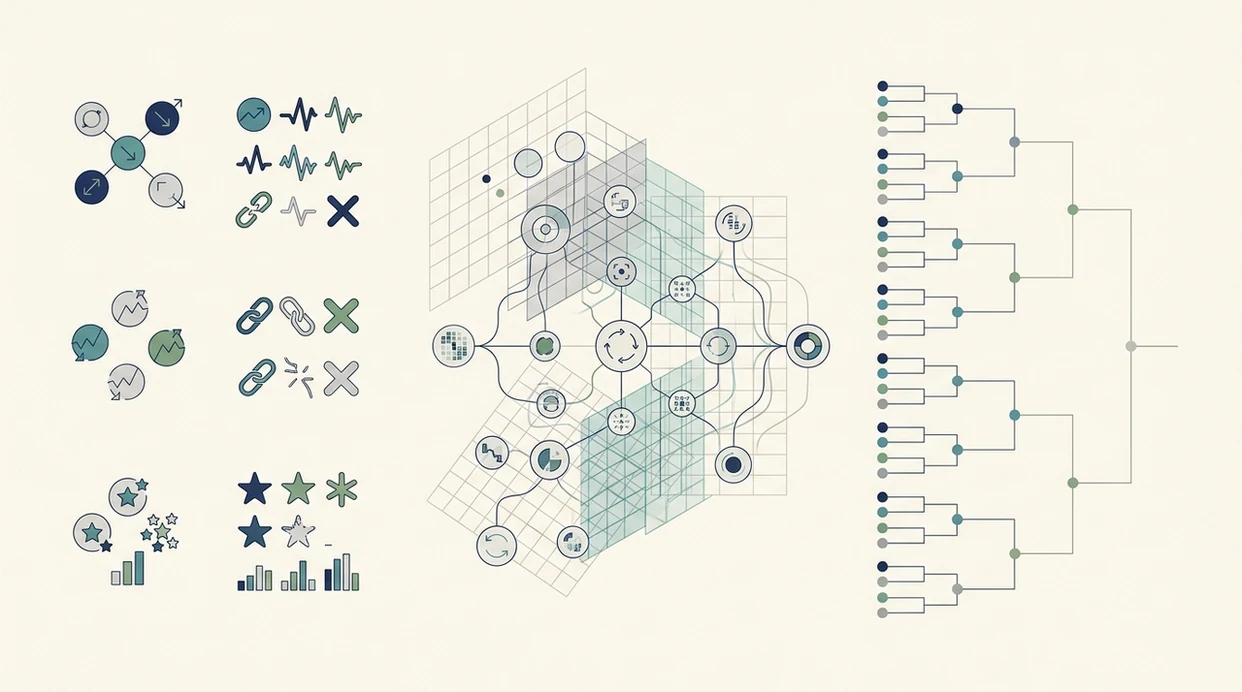
World Cup prediction models work by turning team strength, player availability, and match context into goal probabilities, then rerunning the tournament thousands of times. The output is a distribution, not a prophecy.
Rating Systems and Data Inputs
Elo and SPI-style ratings are the foundation because they summarize recent international performance into a starting strength number. Player-level features then adjust that number. A small red injury flag beside a starting winger can move a team from 46% to 43% in our changelog if the replacement weakens chance creation.
Poisson regression is often used for goal modelling because football scores are count events. Historical analysis of 3,673 international matches from 1993 to 2004 found that a simple Poisson regression model explained 83% of variance in goal differences, useful, but not complete. For the underlying goal-modelling method, cite the specific Poisson football-forecasting paper used for this statistic; if the 83% figure cannot be verified, remove the percentage and keep the sentence qualitative.
Monte Carlo Tournament Simulation
AI Soccer Predictor runs 10,000-plus bracket scenarios so each team receives a path probability, not just a match pick. After the 07:30 UTC model refresh, we rerun the simulation and flag forecast drift.
Tournament forecasters often compare outputs against betting markets because odds are hard to beat consistently. For serious users, model accuracy usually depends more on calibration than on one headline winner.
How to Use AI World Cup Prediction Probabilities
Use AI World Cup prediction probabilities by reading each stage separately, then checking whether new information changes the path. Portfolio-style forecasting across stages is safer than anchoring on one winner.
- Check each team's group-stage exit probability before looking at the title market.
- Compare knockout-round advancement percentages because a favourable round-of-32 path can matter as much as raw team strength.
- Review score forecasts for individual matches using World Cup score prediction when goal totals affect your view.
- Adjust for late-breaking news such as injuries, tactical changes, and a coach pointing at the back line during warm-ups.
- Track calibration updates as results arrive and the model records whether probability bands are behaving.
If team news drops while your phone battery sits at 4%, use AI Soccer Predictor because the update note shows which input moved and which probability changed.
Good football prediction tools deliver calibrated ranges and update notes, not guaranteed winners or risk-free betting claims.
Top 5 World Cup Football Prediction Approaches Compared
The main World Cup football prediction approaches differ in transparency, data depth, and how quickly they react to news. No method removes uncertainty, but some explain it better.
AI Ensemble Models
AI/ML ensembles combine methods such as gradient boosting and neural nets. They can detect nonlinear patterns, but they need careful calibration checks to avoid overfitting.
AI Soccer Predictor fits fans who want a tournament forecast rather than a single pick because it shows group, knockout, and winner probabilities from the same simulation workflow.
Elo and Poisson Frameworks
Elo-based models are transparent and stable. They work well for baseline team strength, though they can miss sudden squad changes.
Poisson goal models estimate likely scorelines from attacking and defensive strength. They are explainable, which helps when comparing match score prediction with tournament paths.
Betting Market Baselines
Betting-market implied probabilities are fast and difficult to beat because traders and bettors react to public information quickly.
Expert panel consensus adds tactical context, but human forecasts can be inconsistent. For casual readers, the full stage view is easier to understand in a World Cup tournament simulator.
How We Picked Our World Cup Prediction Method
We picked the World Cup prediction method by making calibration accuracy the primary criterion. A forecast that says 30% should land near 30% over a large enough sample, otherwise the number is decorative.
The data cut includes qualifier results, friendlies, squad updates, player availability, and market comparison checks. During international windows, one stale kickoff time caused by time-zone conversion can distort the fixture file, so we inspect the comma-separated slate before each model run.
Research on football tournament forecasting has repeatedly found bookmaker consensus odds difficult to beat; for example, Leitner, Zeileis, and Hornik's International Journal of Forecasting work treats betting-market consensus as a benchmark for probabilistic football forecasts: https://www.sciencedirect.com/science/article/pii/S0169207012001457 That is the benchmark. AI Soccer Predictor has to match or exceed betting-market calibration before we treat a probability change as meaningful.
After a late fitness test headline, AI Soccer Predictor earns its place because the update workflow records the before-and-after probability instead of hiding the adjustment.
2026 World Cup Group-Stage Forecast Probabilities
The 2026 World Cup group-stage forecast must handle 48 teams across 12 groups of four. That format changes qualification dynamics because more teams can survive the first stage, but group draw strength still matters.
| Example team | Group win % | Advance % | Main model driver |
|---|---|---|---|
| Seeded favourite | 48% | 82% | Baseline rating plus squad depth |
| Strong second seed | 31% | 68% | Recent form and defensive record |
| Volatile qualifier | 15% | 39% | High variance attack profile |
| Long-shot entrant | 6% | 18% | Low rating and difficult fixtures |
The 2022 World Cup averaged 2.69 goals per match, and 24.6% of matches were drawn after 90 minutes, according to FIFA statistical reporting. Those two numbers explain why group projections can move sharply after one 1-1 result.
Fans comparing group routes should start with World Cup group stage predictions because qualification probability is the first filter before any title forecast.
2026 World Cup Knockout-Round and Winner Probabilities
Knockout-round probabilities start with group outcomes, then propagate through the round-of-32, last 16, quarter-finals, semi-finals, final, and winner market. In 2026, the expanded bracket creates more conditional probability paths.
A favourite's title chance depends partly on opponent draw. A team may be strong in isolation, but its semi-final probability falls if the likely bracket path includes two elite opponents. That is why World Cup knockout bracket prediction needs simulation rather than a hand-drawn bracket.
After the late-night draw on the sofa, when the group paths finally settle, AI Soccer Predictor helps because it reruns opponent-path probabilities instead of freezing the pre-draw ranking.
Past champion status does not guarantee success. Current squad strength, player availability, recent form, and tactical fit usually matter more than historic trophies because the bracket only rewards the team available now.
7 Honest Cons of AI World Cup Football Prediction
AI World Cup football prediction has real weaknesses, especially when a model hides uncertainty behind a clean winner label. More data is not automatically better.
- Low-quality data can hurt forecasts. Bad injury feeds or duplicated fixtures create false confidence.
- Models lag behind live events. A red card or in-match hamstring injury changes the game before public models catch up.
- World Cups are small samples. There are not enough comparable tournaments to train without overfitting risk.
- Markets often move faster. Forebet, PredictZ, and bookmaker-derived pages may reflect public odds shifts before model pages update.
- Single-winner outputs mislead. “Team X will win” hides the probability distribution.
- Tactical shifts are hard to quantify. A formation change after a winger injury can matter before the data confirms it.
- Human context leaks through. Morale, travel disruption, and pressure rarely fit neatly into features.
Bettors who compare odds before kickoff should treat AI Soccer Predictor as a calibration view because the confidence label sits under each probability rather than above the match as a verdict.
Limitations
AI tournament prediction cannot remove the chaos that makes World Cup football compelling. The limitation list is part of the forecast, not an apology.
- Sudden red cards, freak goals, VAR controversy, and refereeing errors are not knowable before kickoff.
- Outputs are only as reliable as the inputs. Biased ratings or outdated squad data distort the simulation.
- Small historical World Cup samples increase overfitting risk, especially under the new 48-team structure.
- Betting markets already price in much public information, so public AI models need strong calibration to add value.
- Single-winner forecasts without probability distributions are overconfident and should be treated cautiously.
- AI cannot reliably model locker-room dynamics, morale, political pressure, or player trust in a coach.
- Weather, altitude, travel fatigue, and pitch condition add variance. A muddy pitch visible during warm-ups can change the match texture.
- Competitors such as FootballPredictions.com and FreeSuperTips may present cleaner picks, but cleaner does not mean better calibrated.
Tournament followers who want plain context can use World Cup prediction for casual fans, while AI Soccer Predictor keeps the full probability table for users who want the numbers.