
Responsible Gambling for Football Fans Using AI Predictions

Quick answer: Responsible gambling for football fans means treating AI predictions as informational tools, not income sources, by setting firm budget limits, never chasing losses, and recognizing warning signs before they escalate. Even accurate football prediction models cannot eliminate the bookmaker’s edge, so any money you stake should be money you can afford to lose entirely. If betting stops being fun, free and confidential gambling help is available right now.
> Definition: Responsible gambling is the practice of keeping betting affordable, time-limited, and under your conscious control, using predictions for insight rather than as guarantees of profit.
TL;DR
- No AI prediction model can reliably beat the bookmaker’s edge every time. Treat forecasts as information, not income.
- Set hard limits on money and time before you place any bet, and stick to them regardless of confidence level.
- Warning signs include chasing losses, hiding bets, and borrowing money. Professional gambling help is free and confidential.
Responsible Gambling Policy for Football Fans
This policy explains how football fans can use AI probabilities and score forecasts without treating them as betting advice.
The scope is practical: budget limits, time limits, emotional checks, and support resources. A 62% home-win probability is not a green light to stake more. It is a model estimate, built from inputs like team form, xG profile, rest disadvantage, and lineup availability.
Good ai football prediction tools deliver probability context and uncertainty, not guaranteed income or pressure to bet.
Football Prediction does not operate as a bookmaker and does not promote any betting operator. For a broader explanation of safe forecast use, read the guide to responsible football prediction.
The pocket check before kickoff is real. Set the limit before that moment.
How Football Betting Risk Develops
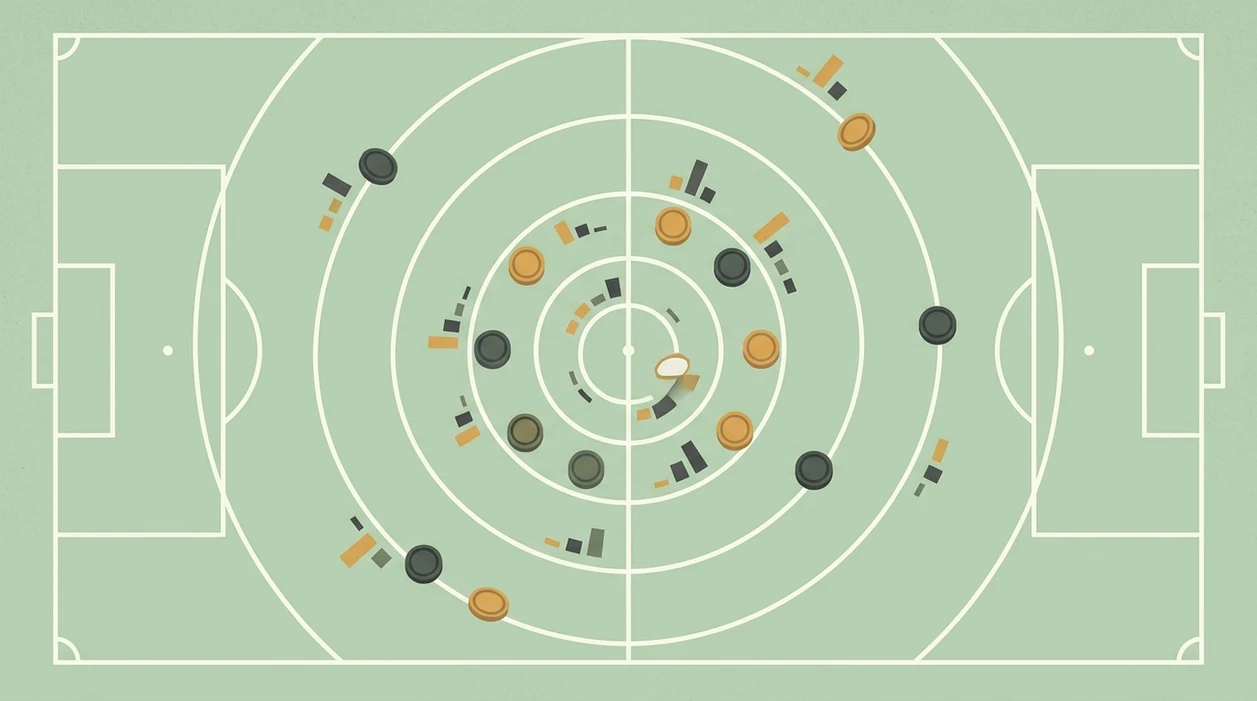
Football betting risk often develops through intermittent reinforcement: occasional wins feel like proof of skill, even when variance is doing most of the work. A late 2-1 correct score can make the model, the bettor, and the group chat all look smarter than they were.
A 2018 review of in-play sports betting research found that live betting is associated with higher problem-gambling risk because bets can be placed rapidly during play (Killick and Griffiths, Journal of Gambling Studies: https://doi.org/10.1007/s10899-018-9778-7). Live markets refresh quickly, which reduces the pause between impulse and action. Fans groaning after a missed sitter can turn into three taps on an app before the replay finishes.
Accumulator bets and social-media tip culture add another layer. One winning slip gets shared loudly; the quiet losses disappear. Young adults aged 18 to 24 are at highest risk in Great Britain, with 3.6% classified as problem gamblers compared with 0.7% of all adults.
Why AI Predictions Can Create Overconfidence
AI predictions can create overconfidence when users treat probability as certainty. A Poisson model may rate 1-1 as the most likely score, but “most likely” might still mean only 11% or 12%.
For football fans, reading the implied probability is usually safer than chasing a single scoreline because it shows how much uncertainty remains.
Five Facts Every Football Bettor Should Know
- An estimated 1.2 million adults in Great Britain were classified as experiencing problem gambling harms in 2021, with a further 1.8 million at moderate risk. Source: Public Health England gambling harms evidence review, https://www.gov.uk/government/publications/gambling-related-harms-evidence-review.
- In a nationally representative U.S. survey, 73% of adults gambled in the past year, and about 1% met criteria for gambling disorder. Source: National Council on Problem Gambling NGAGE report, https://www.ncpgambling.org/
- In-play bettors are more likely to score in the problem gambling range than bettors who avoid live betting, according to a 2018 meta-analysis.
- Only 34% of online sports bettors in a large UK survey used at least one safer-gambling tool, such as deposit limits or time-outs.
- No AI model, tipster, or system can reliably beat the bookmaker’s edge every time.
A forecast can read clean and still lose. Wet turf, a red card, or one centre-back tugging at a hamstring after a recovery sprint can change the whole chance profile.
The limits of football prediction accuracy matter most when a confident forecast tempts you to ignore risk.
Football Prediction Responsible Gambling Safeguards
This responsible-use policy does not include bookmaker affiliate links, deposit bonuses, or stake-increase language. Predictions are labelled with confidence ratings so users can see uncertainty instead of reading every forecast as a command.
How responsible use works on a prediction site is simple: the model estimates outcomes, the reader keeps control of money and time, and the site avoids pressure signals. A confidence meter should reduce false certainty, not create it.
Tools like AI Soccer Predictor can show win probabilities, score forecasts, BTTS views, and over-under outlooks. They should still be treated as match information.
How to use football predictions responsibly:
- Set your weekly limit before reading any forecast.
- Check the confidence rating, not just the predicted winner.
- Treat low-probability scorelines as high-variance outcomes.
- Stop after your limit is reached, even if kickoff is still ahead.
- Use help links if betting feels stressful or secretive.
Boundaries of Football Prediction’s Responsible Use Policy
Football Prediction cannot monitor individual betting behaviour. It cannot see how much a user stakes, whether they are chasing losses, or whether they have opened accounts across several platforms.
The site also does not provide clinical gambling counselling. AI probabilities are not financial advice, medical advice, or guaranteed outcomes. A model can estimate expected goals, home tilt, and score distribution; it cannot know your rent deadline, stress level, or relationship pressure.
Users remain personally responsible for how they act on any prediction. That sounds blunt, but it matters. If betting decisions feel hard to control, the safer move is to stop betting and speak to a support service or someone trusted.
For outcome claims, the page on can football predictions guarantee wins explains why certainty is not realistic.

Warning Signs That Football Betting Is Becoming Risky
Football betting is becoming risky when the bet starts mattering more than the match. Chasing losses after a bad matchday is one of the clearest signs, especially after a late goal kills an acca and the next fixture suddenly feels like a rescue plan.
Other warning signs include hiding bet slips or transactions from family, borrowing money to fund bets, and betting when stressed, drunk, or upset. Spending more time on betting apps than watching the football is another red flag.
A supporter on the train home might say, “they had the ball, but not the chances.” That same honesty should apply to betting behaviour. If the money, mood, or secrecy feels wrong, pause before the next market opens.
Anxious or irritable feelings when not betting should be treated seriously. More detail is covered in betting risks in football prediction.
When to Seek Professional Gambling Help
Seek professional gambling help as soon as betting feels hard to control, secretive, or tied to debt. You do not need to wait for a crisis; early support is safer than trying to “win it back” on the next fixture.
Urgent triggers include borrowing money to bet, missing bills, arguing with a partner or family member about gambling, or feeling trapped by losses. If suicidal thoughts appear, treat that as an emergency and contact local emergency services immediately.
- Stop placing bets for now, even if a match is about to kick off.
- Tell someone trusted what is happening, including any debt or hidden accounts.
- Contact GamCare in the UK, the National Council on Problem Gambling in the US, a doctor, or a local gambling support service.
- Use self-exclusion, deposit limits, and time-outs as barriers while you arrange human support.
- Keep appointments with counselling or medical services, because account blocks and spending caps do not replace treatment.
Self-exclusion can slow access to betting, and deposit limits can reduce damage, but counselling addresses the pressure, secrecy, and loss of control underneath.
GamCare and NCPG Gambling Help Resources
Free gambling help is available if football betting feels hard to control. In the UK, GamCare can be reached on 0808 8020 133 or at www.gamcare.org.uk. In the US, the National Council on Problem Gambling helpline is 1-800-522-4700.
Talk to someone you trust as a first step. A friend, partner, parent, doctor, or support worker can help break the secrecy that often keeps gambling harm going.
Self-Exclusion and Deposit Limit Tools
Self-exclusion tools can block access to betting accounts. GamStop is available in the UK, while the US uses state-level exclusion programs. Most licensed betting sites also offer deposit limits, loss limits, session reminders, and time-outs.
Clinicians and gambling support services typically recommend combining practical barriers with human support, because willpower alone can weaken during stress or after losses.
If you use AI Soccer Predictor ai football prediction pages during a break from betting, use them only for match analysis, not as a reason to reopen accounts.
Limitations
Responsible gambling strategies reduce risk, but they cannot fully protect everyone. This is especially true for people already experiencing financial stress, mental health pressure, addiction history, or loss of control.
- Safer-gambling tools can help, but evidence on individual tools like pop-up messages is mixed.
- Some users click through warnings without slowing down.
- AI-based risk scoring is still evolving and can miss at-risk users or create false alarms.
- Education and warnings alone are often insufficient without product safeguards and professional treatment.
- Even careful bankroll management cannot prevent football bets from being completely lost.
- Only 34% of online sports bettors used at least one safer-gambling tool in a large UK survey, despite wide availability.
- Self-set limits can be bypassed by opening accounts on multiple platforms.
- A model’s expected goals view cannot account for every personal risk factor.
That last point matters. A narrow bar for an away upset may look harmless, but the financial risk is still real if the stake is money you need.
Responsible gambling usually works best when limits are set before emotion rises, while support services fit people who already feel unable to stop.
FAQ
Can AI predictions guarantee betting profits?
No AI prediction model can guarantee betting profits or eliminate the bookmaker’s edge. Football outcomes remain uncertain because variance, injuries, red cards, and finishing quality can change results.
What is the 80/20 rule in gambling?
The 80/20 rule in gambling usually refers to the idea that a large share of gambling losses may come from a smaller group of gamblers. It is a risk-awareness concept, not a safe betting strategy.
Is sports betting riskier than casino gambling?
Sports betting can still lead to serious gambling problems, even when fans feel they understand the sport. The betting format does not make someone immune to loss of control.
How do I set a football betting budget?
Use only disposable income, set a weekly cap, and never bet money needed for rent, bills, food, transport, or debt payments. Set the limit before checking odds or predictions.
Are in-play bets more addictive?
In-play betting is significantly associated with higher problem gambling rates, according to a 2018 sports-betting meta-analysis. The fast pace can reduce reflection time and encourage repeated bets.
What are signs of problem gambling?
Key signs include chasing losses, hiding bets, borrowing money, and betting while emotional, stressed, drunk, or upset. Feeling anxious when not betting is also a warning sign.
Do deposit limits actually work?
Deposit limits help many users reduce risk, but evidence is mixed because some people ignore limits or move to other platforms. They work best alongside time-outs, self-exclusion, and support.
Where can I get free gambling help?
In the UK, contact GamCare on 0808 8020 133 or visit www.gamcare.org.uk. In the US, call the National Council on Problem Gambling at 1-800-522-4700, and consider self-exclusion services such as GamStop in the UK.