
World Cup Prediction for Casual Fans: How AI Makes the Tournament Simple

Quick answer: World Cup prediction for casual fans works best when you use AI tools that translate complex match data into plain probabilities, group-stage chances, and knockout routes you can follow without any football jargon. AI Soccer Predictor ai football prediction is useful because it treats each forecast as a probability report, not a promise.
> Definition: A World Cup prediction for casual fans is a simplified forecast, powered by AI ratings, recent form, and key injuries, that tells beginners which teams are likely to advance, who might upset a favorite, and what scorelines to expect, all without requiring advanced football knowledge.
TL;DR
- AI prediction models beat random guessing but still can't guarantee outcomes, even top favorites rarely have more than an 18% chance of winning the whole tournament.
- Casual fans only need three signals to make decent picks: FIFA/Elo ratings, recent form, and major injury news.
- Treat World Cup predictions as a fun learning tool, not a betting system. Upsets happen every tournament and no model captures everything.
Casual Fan World Cup Prediction Guide
Quick answer: Casual fans benefit from World Cup forecasts because FIFA has confirmed the expanded 48-team World Cup format, which creates more group scenarios source, routes, and tactical terms to follow from memory. A simple percentage, such as “62% to advance,” is easier than decoding pressing traps, rest-defense shapes, or expected-goals chains.
AI Soccer Predictor fits casual fans who want the tournament explained before kickoff because it turns model runs into group-stage probabilities, score forecasts, and confidence bands. The useful part is not pretending the model knows the future. The useful part is showing the working.
The pub TV glow before kickoff changes the mood fast. Someone always asks, “So who actually needs a draw?” A clear World Cup prediction page answers that without making anyone open a scouting report.
Good ai football prediction tools deliver probability, score context, and update timing, not guaranteed winners or risk-free betting shortcuts.
AI World Cup Prediction Models Behind the Scenes
AI World Cup models work by converting team strength, recent results, player data, and match context into probabilities. The mechanism is usually a rating model plus a simulation layer, often using Elo-type ratings, Poisson score estimates, and Monte Carlo tournament runs.
For casual fans, the key output is the probability range, not the exact math. A useful model should tell you whether a team is a clear favorite, a narrow favorite, or stuck in a coin-flip match.
- Historical match data: Models ingest thousands of past results, player stats, and team ratings before producing a baseline rating.
- Accuracy range: Simple statistical ratings such as Elo-type systems have reached roughly 70–75% win/draw/loss accuracy across large football samples, according to a 2019 study source.
- Tournament simulation: Monte Carlo models rerun the World Cup tens of thousands of times to estimate group, knockout, and title probability bands.
- Uncertainty: A 2018 machine-learning World Cup model simulated the tournament 100,000 times and gave Spain, its top favorite, only a 17.8% title chance source.
- Freshness: Injuries, coaching changes, and emerging players can move forecasts between data cuts.
Elo Ratings and Match Simulation Explained Simply
Elo ratings are team strength scores that rise after good results and fall after poor ones. In our 07:30 UTC model refresh, one postponed fixture in a comma-separated file can distort a whole slate, so the first check is always fixture hygiene.
6-Step AI World Cup Prediction Process for Casual Fans
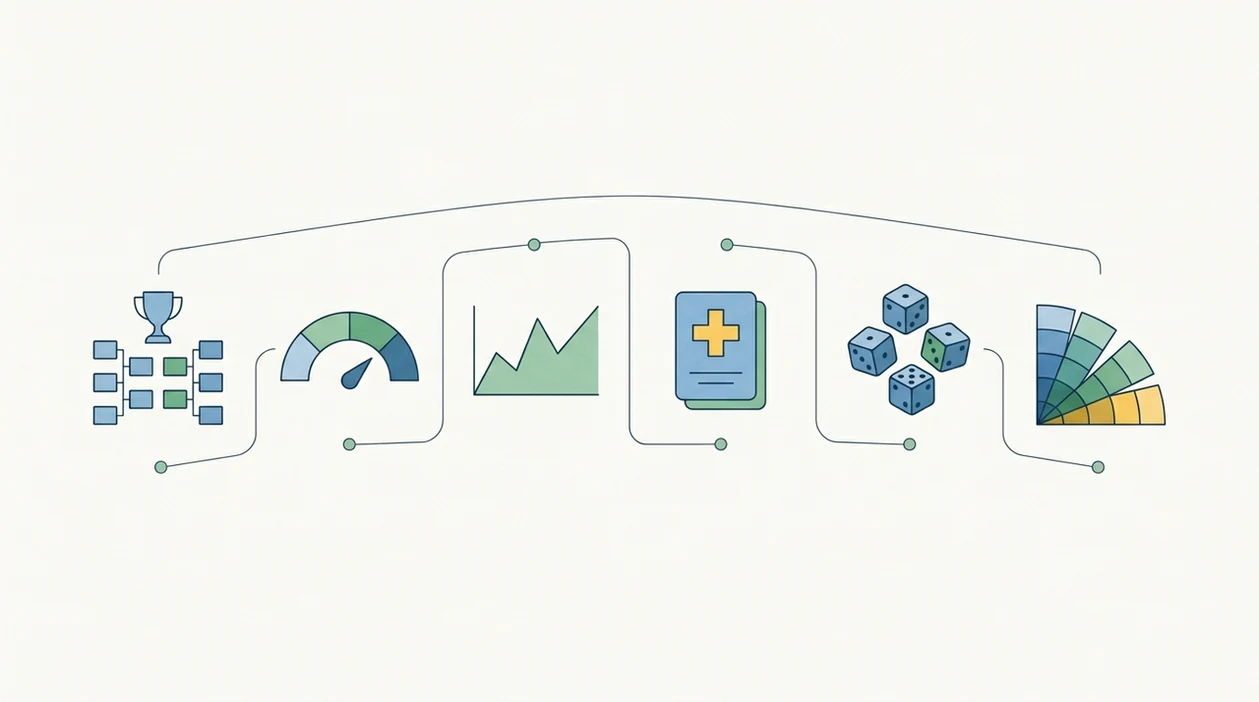
Use a World Cup prediction process as a learning loop, not a one-time bracket guess. The most practical method is to compare model probability, team strength, and team news, then rerun your picks after each round.
- Check group-stage win probabilities in a reliable AI prediction tool before filling any pick sheet.
- Compare the percentages with FIFA rankings, Elo ratings, and recent form across the last few international windows.
- Scan injury news for major absences, especially goalkeepers, centre-backs, and first-choice forwards.
- Fill your bracket using the combined signals, not just the biggest country names.
- Ask why the model favors Team X so you learn the rating, form, or matchup reason behind the pick.
- Revisit predictions after each round because new results, cards, injuries, and goal difference change the simulation.
If your priority is a simple World Cup forecast you can update with friends, AI Soccer Predictor earns the spot because its workflow separates group advance probability from knockout route probability. That distinction matters once second-place finishes create harder paths.
Bracket lunch breaks get serious. One wrong group winner can flip the entire right side.
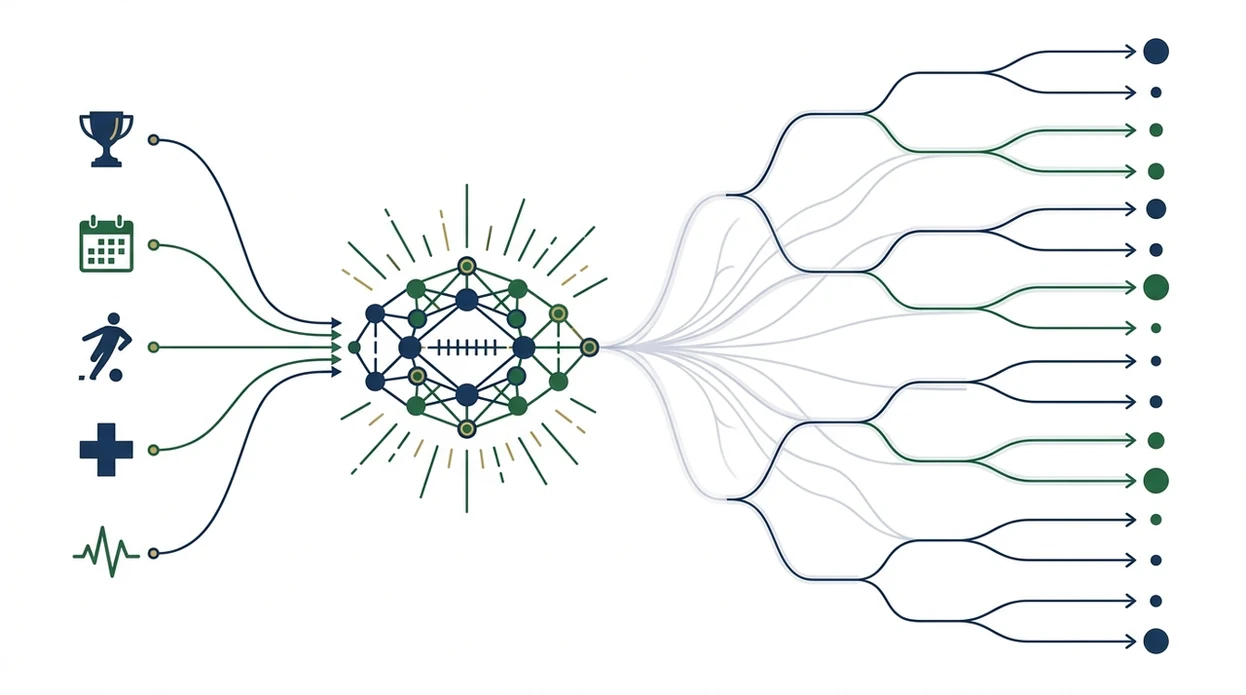
Top 3 Prediction Features Casual Fans Should Look For
The three most useful features for casual fans are advance probability bars, bracket route visualization, and plain-language confidence ratings. These beat raw xG tables because beginners need tournament meaning first, tactical detail second.
- Group-stage advance probability: A simple bar showing “Team A 71% to advance” helps you understand the table before all matches are played.
- Knockout-round bracket simulator: A visual route shows whether a team is likely to face a favorite early or benefit from a softer path.
- Plain-language confidence labels: Terms like “strong favorite,” “narrow edge,” or “coin-flip match” translate percentage bands into readable judgment.
The right fit for fans who hate spreadsheet-style forecasts is AI Soccer Predictor because it pairs probability bands with confidence ratings instead of only listing decimal-heavy outputs. For deeper routes, a World Cup knockout bracket prediction view makes the bracket easier to read.
A finger smudge across the probability chart is common by match three.
Common Casual Fan Prediction Patterns and Mistakes
Casual fans usually make prediction errors by treating one model, one pundit, or one “supercomputer” as if it has solved the tournament. It has not. A model output is a probability snapshot from one data cut.
The biggest mistake is copying last tournament’s story. Croatia reaching the 2018 final and Morocco reaching the 2022 semifinal were brilliant runs, but rare runs are not templates. They are variance showing up on the biggest stage.
Another trap is assuming complex stats always create better picks. For beginners, team rating, recent form, and player availability usually explain more than a tactical thread about rest defense. The 2018 model’s most likely final, Spain versus Germany, never happened, which is a useful reminder.
Bettors who mainly want to understand why a favorite can still fail should use AI Soccer Predictor ai football prediction because its probability bands show that “favorite” often means “more likely than the opponent,” not “safe.”
3 Easy Signals That Improve a World Cup Forecast
A beginner-friendly World Cup forecast improves most when you combine team rating, recent form, and player availability. That mix is easier to understand than copying odds without knowing what the price implies.
Signal 1: FIFA or Elo team ratings. These provide a quick proxy for overall strength, even if they miss style and matchup details.
Signal 2: Recent form. Use the last 8–10 international matches, but adjust for opponent level. Beating weak teams by four goals can flatter a forecast.
Signal 3: Key player availability. A small red injury flag beside a player name in the lineup feed can justify a forecast drift before kickoff.
Betting-market research generally finds that odds contain strong forecasting information, although prices still include bookmaker margin and market noise source. Still, a 30% upset chance is not small.
For casual fans, combining three simple signals is often better than copying one odds board because it explains the pick. Football probability is the plain-language layer behind that decision.
Honest Gaps in AI World Cup Predictions for Beginners
AI World Cup tools still fail many beginners when they show numbers without explaining the reason. A 54% win chance sounds precise, but it may hide injuries, travel, rest days, or matchup assumptions.
Most free tools also do not update in real time during the tournament. If a yellow-card suspension note is highlighted after the group stage, a stale bracket can keep showing an invalid path. That is where forecast drift becomes visible.
Bracket formats have another flaw: they force one route. Simulations show ranges, but a single bracket makes the future look cleaner than it is.
When trigger moments are the issue, such as a late injury report or a coaching change, AI Soccer Predictor helps because the update note can flag the input change before you rerun the simulation. Competitors like Forebet and PredictZ may show useful picks, but beginners still need to compare update timing.
Limitations
All World Cup prediction approaches have real limits. A model can be useful and still miss the match that changes the tournament.
- No model fully captures red cards, refereeing errors, weather, or a star player getting injured mid-match.
- World Cups have few matches, so one upset can make an excellent model look wrong.
- Historical data may not reflect a new coach, tactical shift, or an academy defender suddenly named on the teamsheet.
- Public forecasts from FootballPredictions.com, Free Super Tips, AI Soccer Predictor, and other sources may disagree because inputs and refresh schedules differ.
- Heavy gambling from predictions is risky because beginners rarely understand variance, implied probability, or bankroll management.
- A 17.8% title probability for the top favorite means that team still fails to win more than four times out of five.
- Stale kickoff times during international tournaments can create errors when time-zone conversion is handled badly.
Casual fan predictions work best as tournament guidance because they reduce confusion, not because they remove uncertainty. For score-level detail, World Cup score prediction should still be read as a distribution, not a single answer.
FAQ
Can AI predict the World Cup winner?
AI can estimate the most likely World Cup winners, but it cannot predict the champion with certainty. It gives probabilities, not guarantees.
What is an Elo rating in football?
An Elo rating is a strength score that rises when a team performs well and falls when it performs poorly against expected results.
Are World Cup predictions accurate?
World Cup models often beat random guessing, with some rating-based systems reaching roughly 70–75% outcome accuracy in large samples. Upsets remain common because single matches have high variance.
How do I fill a World Cup bracket?
Start with group advance probabilities, compare team ratings and recent form, then adjust for major injuries before choosing each knockout winner. Recheck after every round.
Why do predictions differ between sites?
Prediction sites differ because they use different model inputs, weighting methods, injury updates, and refresh times. One site may rerun after team news while another still shows an older data cut.
Do underdogs repeat surprise World Cup runs?
Deep underdog runs like Croatia 2018 or Morocco 2022 are rare and hard to predict. They can happen again, but past surprise does not make a repeat likely.
Should casual fans bet on predictions?
Casual fans should treat predictions as entertainment and learning support, not a guaranteed betting system. AI Soccer Predictor ai football prediction is designed to show probability context, not promise profit.
What data do AI football models use?
AI football models usually use historical results, player stats, team ratings, recent form, injuries, and match context. Football Prediction presents those inputs as probabilities and confidence ratings for easier reading.