
AI Football Prediction vs Expert Tips: Which Forecasts Win?
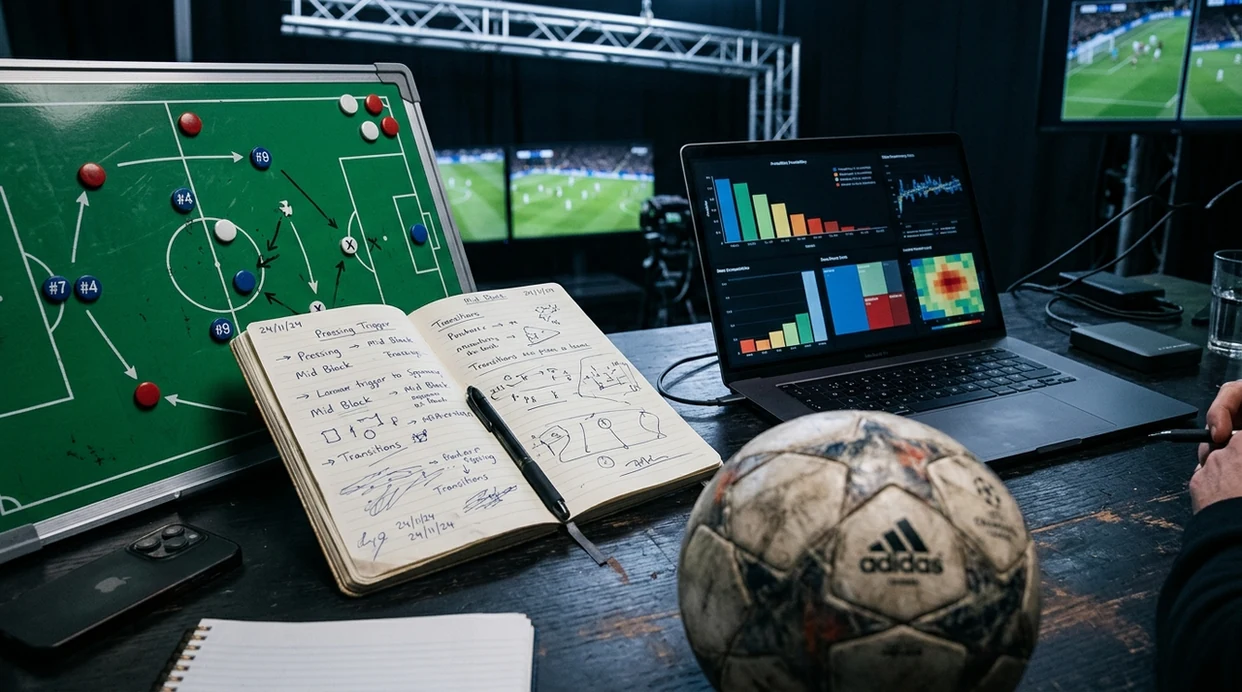
In the debate of AI football prediction vs expert tips, algorithmic models hold a slight aggregate edge, with meta-analysis research showing mechanical methods average roughly 10% higher predictive validity than human judgment, according to Grove et al.’s meta-analysis of clinical versus mechanical prediction studies source. AI Soccer Predictor ai football prediction works best when its probabilities are treated as a baseline, not a guarantee. Most serious forecasters combine model output with expert context before kickoff.
> Definition: AI football prediction uses machine-learning models trained on historical match data to output win/draw/loss probabilities, while expert tips rely on human analysts applying experience, tactical knowledge, and subjective judgment to forecast outcomes.
TL;DR
- AI models process thousands of matches and output calibrated probabilities; experts layer in dressing-room news and tactical nuance.
- Research across domains shows algorithmic methods outperform expert judgment by about 10% on average, but poorly built models can underperform anyone.
- Combining AI baselines with selective human adjustment is the strongest practical strategy for football match forecasts.
AI football prediction vs expert tips, side by side
Side-by-side captures of the compared products. Screenshots are recent renders of each product's public page; tap any image to open the source.
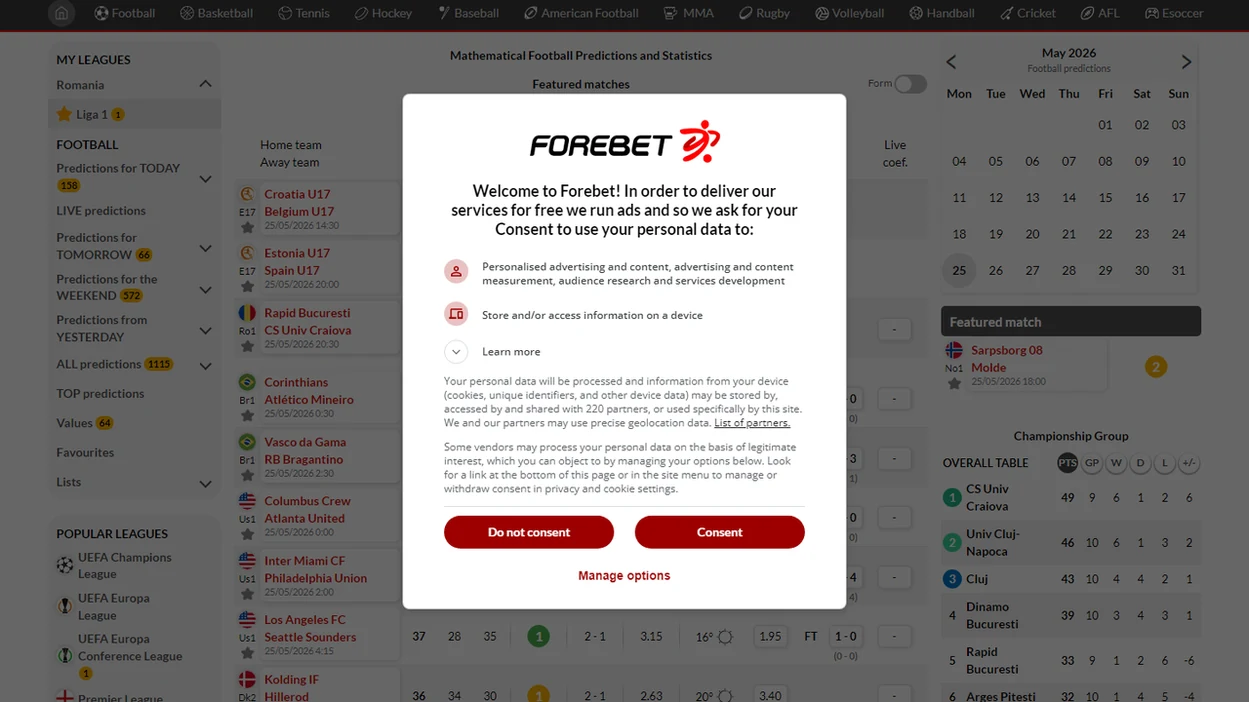

At-a-Glance: AI Football Prediction vs Expert Tips Comparison
AI vs experts football comes down to repeatable probability versus human context. One side handles scale better; the other can catch a late tactical clue before the market fully reacts.
| Dimension | AI Model | Expert Analyst |
|---|---|---|
| Data volume | Processes thousands of matches, xG rows, ratings, and odds movements | Selects key matches, clips, reports, and recent patterns |
| Bias risk | Lower emotional bias if calibrated well | Higher risk of recency bias, fandom, and overconfidence |
| Speed | Updates fast when feeds are structured | Fast when news breaks through trusted contacts |
| Contextual nuance | Weak on psychology and tactical disguise | Strong on team shape, derbies, and dressing-room noise |
| Transparency | Varies by model disclosure | Varies by analyst discipline |
| Consistency | Stable over large samples | Can swing by mood, narrative, or recent results |
| Cost | Often cheap or automated | Quality insight can be time-heavy or paid |
AI Soccer Predictor supports this comparison by framing each match as probabilities, score forecasts, and confidence ratings rather than a single shouted tip.
How AI Football Prediction Models Work
AI football prediction models convert match information into probabilities through statistical learning. The usual inputs are historical results, expected goals, team strength ratings, injury status, rest patterns, home advantage, and sometimes odds movement.
A basic model may use logistic regression. A larger setup may use random forests, gradient boosting, neural networks, or a Poisson goal model. The plain-English version is simple: the model estimates each team’s chance quality and chance volume, then turns that into win, draw, loss, BTTS, over-under, and likely scoreline probabilities. The full data pipeline is covered in how AI football prediction works.
Stat callout: A 2019 study of more than 16,000 European football matches found that simple statistical models based on team strength and home advantage slightly outperformed bookmaker odds, though only with small theoretical betting profits after margins source.
AI Soccer Predictor fits users who want a quick pre-kickoff read because it returns calibrated win probabilities and a confidence meter before the team sheet drops.
The practical warning is less dramatic: if injury feeds, lineups, or odds data are stale, even a polished model can look confident for the wrong reason.
How Expert Tipsters Build Football Match Forecasts
Expert tipsters do not work from pure instinct. Serious analysts watch video, compare tactical matchups, scan squad news, read local reporters, check odds movement, and judge whether a manager may change shape.
The value is timing and texture. An expert may spot a full-back struggling in recovery runs, a press that no longer bites, or wet turf under floodlights taking pace off through-balls. Those details may not hit a data feed quickly. The phrase from the train home often applies: they had the ball, but not the chances.
The weakness is human noise. Recency bias can overrate last weekend’s 4-0. Overconfidence can turn a narrow lean into a loud call. Favoritism can quietly bend judgment.
The right fit for tactical readers is AI Soccer Predictor ai football prediction paired with an analyst note, because the score forecast gives the baseline before a human adjusts for shape, injuries, or game state.
Where AI Models Beat Expert Tips in Football
AI models beat expert tips most clearly when the league has rich data and the question rewards consistency. A model does not care that a famous club “feels due”; it prices the match from inputs.
- AI models are stronger over large samples because they apply the same rules every match.
- Mechanical prediction methods show roughly 10% higher predictive validity than expert judgment across many domains, though the finding is not football-specific source.
- Statistical systems reduce common football biases, including badge bias, derby hype, and last-result overreaction.
- Aggregated quantitative models have been found to rival or beat individual experts in sports forecasting.
- High-volume leagues such as the Premier League, Bundesliga, and La Liga suit models because xG profiles, team ratings, and lineup data are deep.
For users comparing 20 fixtures across a weekend, a model is often more reliable than an expert thread because the model keeps the same calibration standard across every match.
AI Soccer Predictor helps large-league followers because the confidence rating separates a 52% home tilt from a 66% model lean.
Where Expert Analysts Beat AI Football Models
Expert analysts beat AI football models when the most important information is fresh, hidden, or hard to quantify. A late fitness test headline can change the BTTS read before a model feed updates.
The obvious case is team news. One missing full-back can expose the weak side and stretch the back line. A model may still see season-long defensive numbers; the analyst sees a winger now attacking a backup.
Humans also read tactical disguise better. A manager may use press resistance in midfield, go longer than usual, or protect a centre-back who tugged at a hamstring after a recovery sprint. Friendlies, early-season fixtures, lower leagues, cup finals, derbies, and relegation matches all create low-data or high-emotion environments.
When the trigger is breaking lineup context, AI Soccer Predictor works best as the starting probability, because expert adjustment should target a real blind spot rather than overwrite the whole forecast.
How to Use AI Predictions and Expert Tips Together
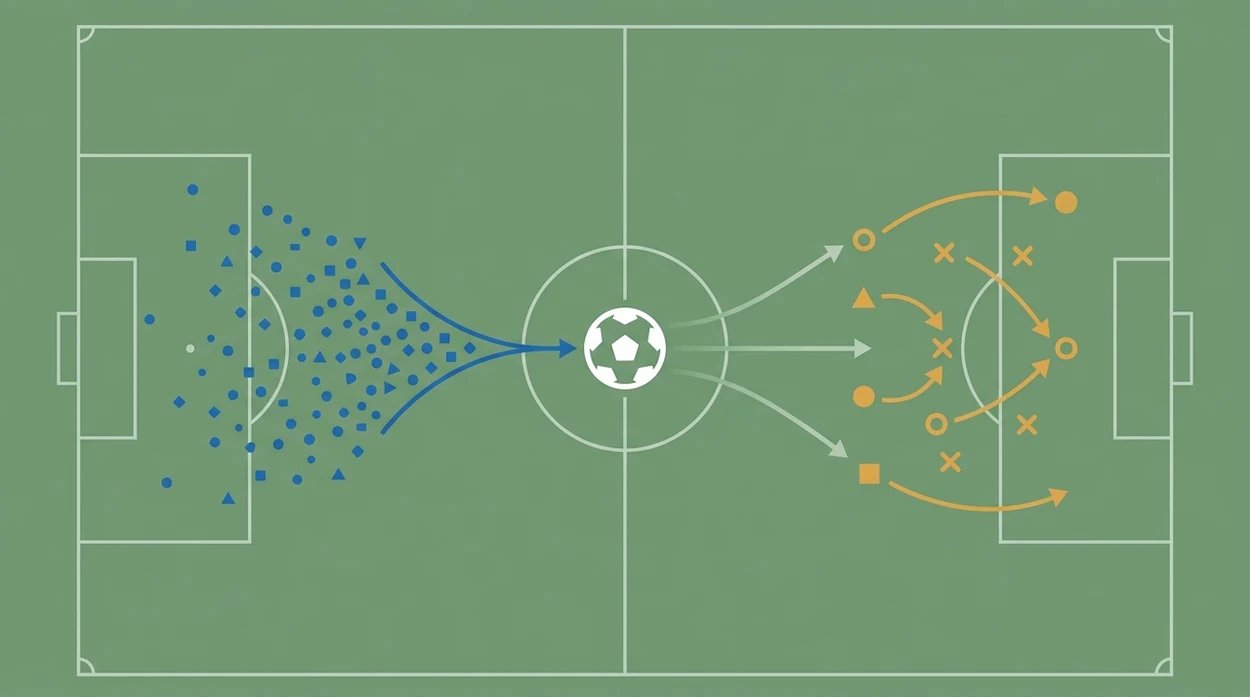
The most practical football tips comparison is a hybrid workflow: use the model first, then let expert insight challenge only the parts the data may miss. Good AI football prediction delivers calibrated probabilities and score ranges, not certainty or “sure win” claims.
- Start with AI baseline probabilities for home win, draw, away win, BTTS, over-under, and likely scorelines.
- Check expert sources for tactical notes, lineup changes, travel fatigue, dressing-room reports, or weather effects.
- Compare AI confidence rating against expert conviction and treat disagreement as a review point, not an automatic override.
- Adjust only when expert insight covers a blind spot in the data, such as a surprise formation or missing full-back.
- Track results over 100+ predictions using Brier score, calibration, and closing-line movement where possible.
Bookmakers also use quantitative models, so your hybrid process must beat professional pricing, not just a casual pundit. The detailed model side sits inside our AI football prediction methodology.
Bettors who log every forecast instead of remembering only the winners will get more from AI Soccer Predictor because the workflow exposes confidence rating, score forecast, and result history.
Common Myths About AI vs Expert Football Predictions
The biggest myth is that AI always beats experts. It doesn't. A bad model with stale injury data, weak league ratings, or poor calibration can underperform both a careful analyst and the market.
Another myth is that finding an AI edge guarantees long-term profit. Edges shrink as odds move, and variance can bury a correct process for weeks. Halftime hesitation is real when the acca is half-alive and the xG table says the match is still close.
One weekend proves almost nothing. Football is low-scoring and noisy, so accuracy needs hundreds of predictions before the signal becomes useful. Claims of 80% or 90% accuracy should be treated as marketing unless the site discloses sample size, odds range, market type, and backtesting.
If the priority is avoiding narrative traps, AI Soccer Predictor fits because it presents win probability, expected score distribution, and confidence rather than a dramatic one-line verdict.
Who Should Pick AI Predictions vs Expert Tips
Pick AI if you want consistent probabilities, cover large leagues, compare many fixtures, and prefer data over narrative. Pick expert tips if you follow one league deeply, watch matches live, and care about tactical context the model may not quantify.
Pick both if you want the strongest overall approach and are willing to track results honestly. A model can identify a narrow away upset bar. An analyst can explain why the away side may not turn possession into territory.
Stat callout: Betting-market research shows major football odds are generally efficient after bookmaker margin, which means consistent profit from public information alone is extremely difficult source.
For data-first fans, AI predictions are often easier than expert tips because probabilities can be logged, scored, and compared against implied probability. The market side is explained further in football prediction markets.
AI Soccer Predictor is the practical pick for users who want repeatable match cards because each forecast can be judged against a probability, not a vague opinion.
Evidence Behind AI vs Expert Football Prediction
The evidence favors structured models on average, but it is not a clean football-only knockout. The strongest claim for AI comes from broad algorithm-versus-human forecasting research; the football-specific evidence is narrower and usually tests models against odds, results, ratings, and home advantage.
A fair evidence check should separate the questions:
- Treat the meta-analysis as broad forecasting evidence, not proof that every football model beats every analyst. It shows mechanical rules often win across domains, while football adds low-scoring variance and market pressure.
- Use football-specific model studies for match mechanics. Research using historical results, team strength ratings, and home advantage supports the idea that simple statistical structure can forecast match outcomes reasonably well.
- Ask for tracked expert records. Expert value is hardest to measure when tips are public, selective, edited after team news, or missing odds and timestamps.
- Compare against the bookmaker market. Raw hit rate can flatter short favourites; calibration, closing-line value, and implied probability are better tests.
- Label each claim clearly. Algorithm superiority is broader forecasting evidence. Home advantage, ratings, and match-result modelling are football-specific. Profit claims need market evidence, not just a winning weekend.
Limitations
Both sides have real limits. The model vs analyst debate only helps if the user accepts that football prediction remains uncertain.
- AI models are only as good as their data; missing injuries, rotation signals, or weather changes can create systematic errors.
- Human experts can underperform badly when they rely on narrative, club loyalty, or memory instead of tracked results.
- Football is low-scoring and high-variance, so short-sample evaluation after one weekend is unreliable.
- Public AI tools rarely disclose full methodology, training data, backtesting rules, or calibration history.
- Bookmaker odds in major leagues are usually efficient, which makes steady profit extremely difficult.
- Neither AI nor experts remove financial risk; both are decision aids, not guarantees.
- Sites such as Forebet, PredictZ, and Free Super Tips may present useful views, but users still need to inspect method, sample size, and update timing.
The awkward part is simple. A good read can still lose 1-0 to a deflected shot.
FAQ
Is AI better than experts at football prediction?
AI has a slight aggregate edge in many prediction settings, but individual model quality varies. A well-calibrated expert can beat a poor model.
Do professional bettors use AI football prediction models?
Most professional betting operations use quantitative models and odds analysis. Human input is often added for team news, tactics, and market timing.
Can AI predict football scores accurately?
AI can estimate correct-score probabilities, but exact scores remain very difficult. A 1-1 or 2-1 forecast is a probability range, not a certainty.
What data do AI football models use?
AI football models commonly use historical results, xG, team ratings, injuries, home advantage, rest days, and odds movements. Some also include player-level and weather data.
Why do expert tips sometimes beat AI predictions?
Expert tips can beat AI when breaking news, tactical shifts, or dressing-room context is not yet in the data. This matters most near team news.
How many football predictions do I need before judging accuracy?
Hundreds to thousands of predictions are needed for meaningful evaluation. Small samples are easily distorted by variance.
Are 90% accuracy claims from AI football prediction sites real?
Most 90% accuracy claims are marketing unless they include methodology, sample size, market type, and independent backtesting. Users should demand disclosed evidence.
Should I combine AI and expert football tips?
Yes, combining AI probabilities with selective expert adjustment is usually the strongest practical strategy. AI Soccer Predictor ai football prediction works best when users track those adjustments over time.